
Human Resource Management
Human Resource Management
Basic Approach
Employees are the ones who drive our business and deliver value to society. We aim to create a work environment that balances high productivity with job satisfaction by ensuring that individual employees gain a thorough understanding of the Company's policies and business strategies and act independently. In the mid-term management plan, we have set "Reform the Corporate Culture" as one of the main activities and selected human capital management as a priority implementation item.
Implementation of Human Capital Management
As the business environment changes, it is essential to strengthen the organization through the development of self-sustained human resources and the operation of systems capable of responding to environmental changes in order to achieve the management targets set forth in the mid-term management plan. "Self-sustained human resources" refers to people who take ownership, proactively determine what needs to be done, and act with agility. To foster self-sustained human resources, the Company supports employees through career development and various systems and measures. In terms of training, we are promoting individual career development by establishing an education framework for enhancing knowledge and skills, and clarifying career plans through career interviews and similar initiatives. In addition, we are promoting HR system reforms to ensure appropriate evaluation and treatment, while also developing an environment that encourages the independence of purpose-driven individuals by implementing measures to place the right people in the right positions and by operating systems that enable diverse working styles. Furthermore, the foundation of these initiatives is the fostering of a corporate culture that is unique to the Company, from the perspectives of organizational revitalization, employee well-being, and enhancing a sense of belonging. We aim to revitalize the organization by promoting the creation of a workplace where employees with diverse insights--regardless of attributes such as gender or nationality--can freely and openly exchange opinions.
We will strengthen our business by managing the organization to create a safe, secure, and vibrant work environment where purpose-driven and self-sustained human resources can achieve results, where individual achievements translate into organizational results, and where people can thrive with even greater motivation.

- Respect for Human Rights
- Development of Human Resources
- Respect for Diversity
- Promotion of Work-style Reform
Respect for Human Rights
Respect for Worker Rights
The IBIDEN Group clearly defines its policy to respect the basic rights of workers, as declared by the International Labour Organization (ILO), as well as to avoid involvement in any violation of human rights in the "IBIDEN Standards for Employee Behavior," which were established to reflect the spirit of the OECD Guidelines for Multinational Enterprises, the United Nations Global Compact, Universal Declaration of Human Rights, and RBA Code of Conduct for Industry Associations among others. Officers and employees respect the basic principles and rights of labor and take actions that follow the common sense and rules of society while complying with the employment-related laws of each country such as the Labor Standards Law and labor regulations.
After preparing the "IBIDEN GROUP Social Responsibility Management Standards," we summarized the mechanism to respond to human rights issues and matters to be noted as a supervisor. Supervisors periodically check the impact of our social responsibilities on workplaces and their risks from the perspective of the Management Standard, including human rights issues. The management standards include checking procedures intended to avoid forced labor and child labor, which are incorporated into the procedure manual of each relevant division. For example, the Management Standards include the Rules to Prohibit the Storage of Private Documents, which are intended to prevent forced labor, and stipulate a minimum age checking procedure, which are intended to prevent child labor.
Human Rights Education, Initiatives to Prevent Harassment
To ensure respect for human rights, the Group offers education on fair employment and human rights, particularly to labor relations managers as well as managers and staff members in charge of recruitment interviews, calling their attention to the prevention of human-rights violations. We also strive to make the need to respect worker rights known to all employees through our Standards for Employee Behavior.
In particular, harassment* is an infringement of employee human rights, and the President & CEO has disseminated the message that it will never be tolerated and is taking measures to address it.
In Japan, to prevent harassment, we provide harassment education for supervisors and employees toward the eradication of all forms of harassment. In particular, training for supervisors targets all supervisors, and gives training in the actions supervisors should perform, from daily communication to responses to consultations and the handling of information. In an effort to create a workplace environment where everyone can work comfortably, we post examples of harassment on our intranet each month so as to provide all employees with correct knowledge of harassment.
We also provide multiple consultation services, such as the Human Resources HOTLINE and the Compliance Consultation Counter, for employees to contact in the event of a human rights abuse or harassment. These all services enable prompt response to the consultations received, while at the same time respecting the will of the consultor and ensuring the protection of his/her security and prohibiting any act of retaliation against the consultor.
In the event of harassment, we will convene the Compliance Committee to investigate and deliberate the case and develop countermeasures. If necessary, we will consult with the Rewards and Disciplinary Committee.
*This includes power harassment, sexual harassment, maternity/paternity harassment, and other forms of harassment.
Assessment (Human Rights Due Diligence)
We believe it is important to work on the issue of human rights with the entire supply chain and thus cooperate with our direct suppliers in dealing with such issues. We have thoroughly explained our efforts for human rights to suppliers, including employment agencies and contractors, in such occasions as information sessions that we have held for them.
In particular, for businesses related to our company, we set issues to focus on in accordance with guidelines from industry organizations. Specifically, by responsibly procuring resources, including conflict minerals, we are required to avoid complicity in human rights violations such as child labor and excessive working hours in the relevant regions (please refer to the Supply Chain Management for details). In Japan, the importance of labor management is increasing, with the number of foreign workers expected to increase due to the amendment of the Immigration Control and Refugee Recognition Act. We demand thorough management of accepting foreign workers so as not to lead to a situation that falls under forced labor, such as debt bondage by sharing the points to be noted when accepting workers from overseas. Additionally, we cooperate with suppliers and Group companies to check the realities of labor management and human rights issues through annual CSR surveys and audits.
In FY2025, no serious human rights violation cases of infringement of labor rights were confirmed in our Group companies or suppliers.

Development of Human Resources (System Enhancement)
We have established Systematic human resource training systems in an effort to develop the human resources necessary to accurately grasp changes in the business environment and create new products and technologies. Specifically, we implement standardized education across the Company (stratified training programs by age group and by job grade) and provide specialized education for selected personnel based on our basic education and training structure. The training programs by age group were completely revised from life plan-based training to career plan-based training in line with changes in our times such as the extension of the mandatory retirement age to 65, while in specialized education, we opened the Human Resource Development Center in 2017. Since April 2026, we have been developing it into a Manufacturing Dojo that integrates technical education, equipment training, and manufacturing training, establishing a system to provide education for personnel capable of underpinning manufacturing operations in a consistent manner. We also focus on the development of personnel who can flourish globally by promoting not only language training but also cross-cultural adaptation training. Furthermore, to achieve our 2030 vision and realize sustainable management, we have launched an executive development program as of 2026 that targets Senior Executive Officers, Senior Managers, and division managers, in order to promote the strategic and planned securing of management personnel.
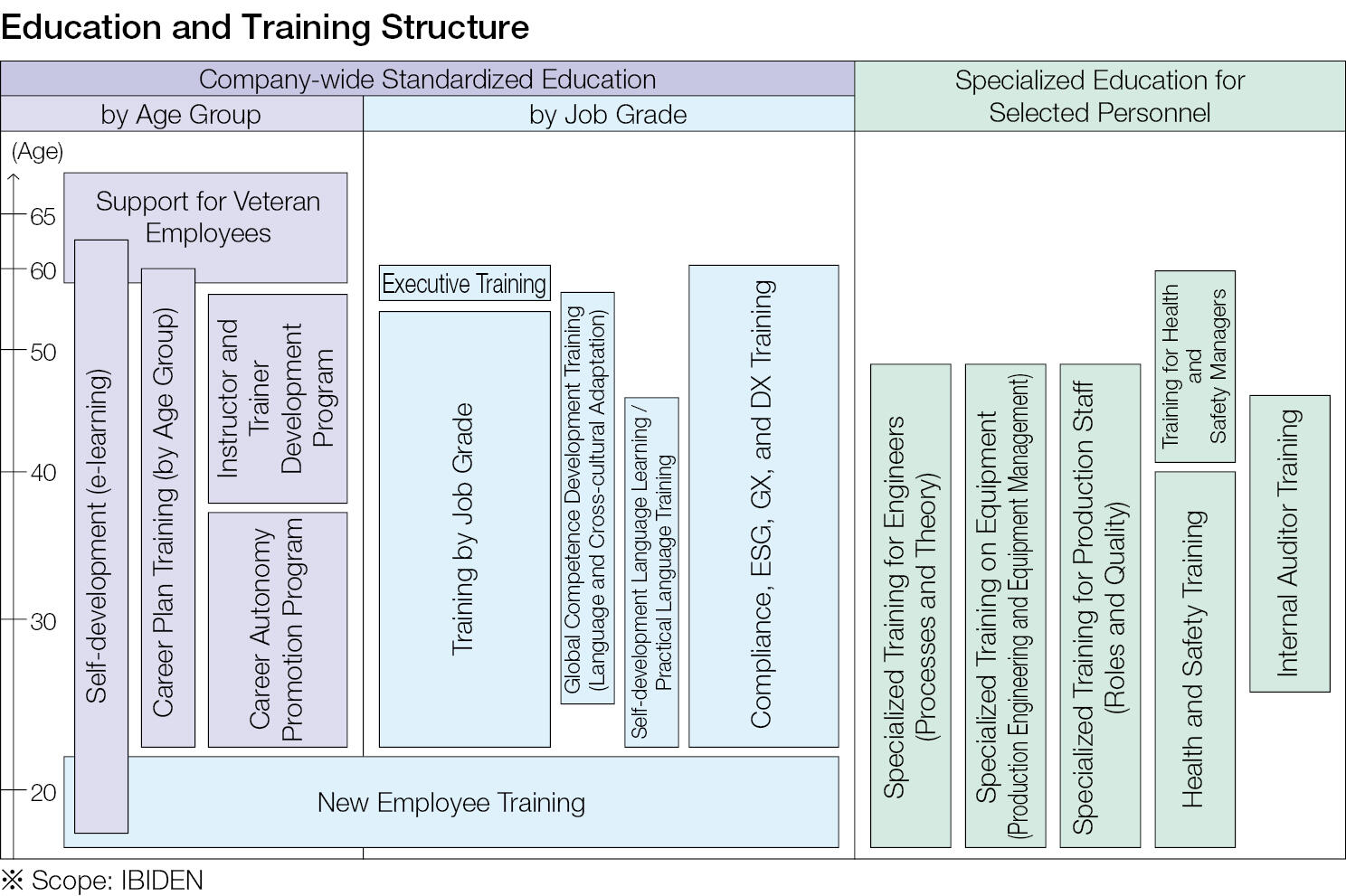
As an indicator for human resource development, we have set an interim target for training time of 21 hours per employee per year by FY2027 (IBIDEN Co., Ltd.).

Specialized Education for Enhancing Manufacturing Strengths
At the Manufacturing Dojo, we provide hands-on training in assembly, processing and other practical skills using the same equipment and parts employed at manufacturing sites, with the aim of passing down awareness, knowledge, insight, and skills. In addition, we have installed safety experience devices to help employees recognize hazards, such as entanglement and electric shock, making the facility a place in which employees broadly gain safety and hazard awareness. Through nurturing human resources, we will enhance on-site capabilities and strengthen the competitiveness of our business.
The Human Resources Division provides education dedicated to the training of engineers in order to keep handing down our technological capabilities to the next generation. The training ranges from the fundamental education required for engineers to training in specialized fields. Nurturing people to be well equipped with skills for the next-generation developments will lead to enhanced technological strengths for IBIDEN. The Division focuses not only on providing knowledge to trainees but also helping them develop the engineer mindset by providing practical education through OJT. Furthermore, in addition to these human resource development efforts, the Division is tasked with the role of a transactive memory that incorporates the technology and expertise held by each department with the aim of achieving efficient R&D and creating new innovation. It plays an important role as a source to continue creating the IBI-TECHNO of the future.

Development of Global Human Resources
We are making an effort to nurture employees who can contribute to strengthening the company's global competitiveness and those who are capable of cross-cultural management. In particular, in order to help employees accept different values and improve their communication skills with overseas staff, after selecting candidates for overseas assignments, we have implemented programs, such as cross-cultural training and practical language training since FY2024. Additionally, we provide e-learning training to improve the management skills of IBIDEN employees who will be appointed as executives of overseas Group companies, and more than 20 employees have taken the training so far.
We also focus on nurturing the core staff of our overseas entities by inviting them to participate in training programs in Japan.
Efforts for Improving Productivity
We regard productivity improvement activities as opportunities for human resource development and are focusing on having employees master how to do the work with a kaizen (continuous improvement) mind. Instead of pursuing the results of activities, we have been starting from solving problems faced by employees in everyday routine work. We review their operations thoroughly including their objectives and purposes, improve work flow in ways that can generate satisfactory results naturally and efficiently, and proactively introduce IT including RPA* to prevent a return to previous conditions. In addition, since these efforts have been carried out across the Company, improvements in cooperation with other departments have been made easily, and as a result, work quality in pursuit of overall optimization has also improved.
Every June, we hold the TPM World Conference, where outstanding improvement initiatives from domestic and overseas bases and Group companies are presented. By providing a platform to present the results of on-site improvements, we maintain high motivation, and by actively involving overseas plants, the event also serves as an opportunity for information sharing and human resource interaction. In addition, we hold regular on-site reporting sessions that provide opportunities for direct dialogue with top management about achievements and difficulties, thereby promoting active improvement activities.
*Robotic Process Automation: Automation of work processes by robots
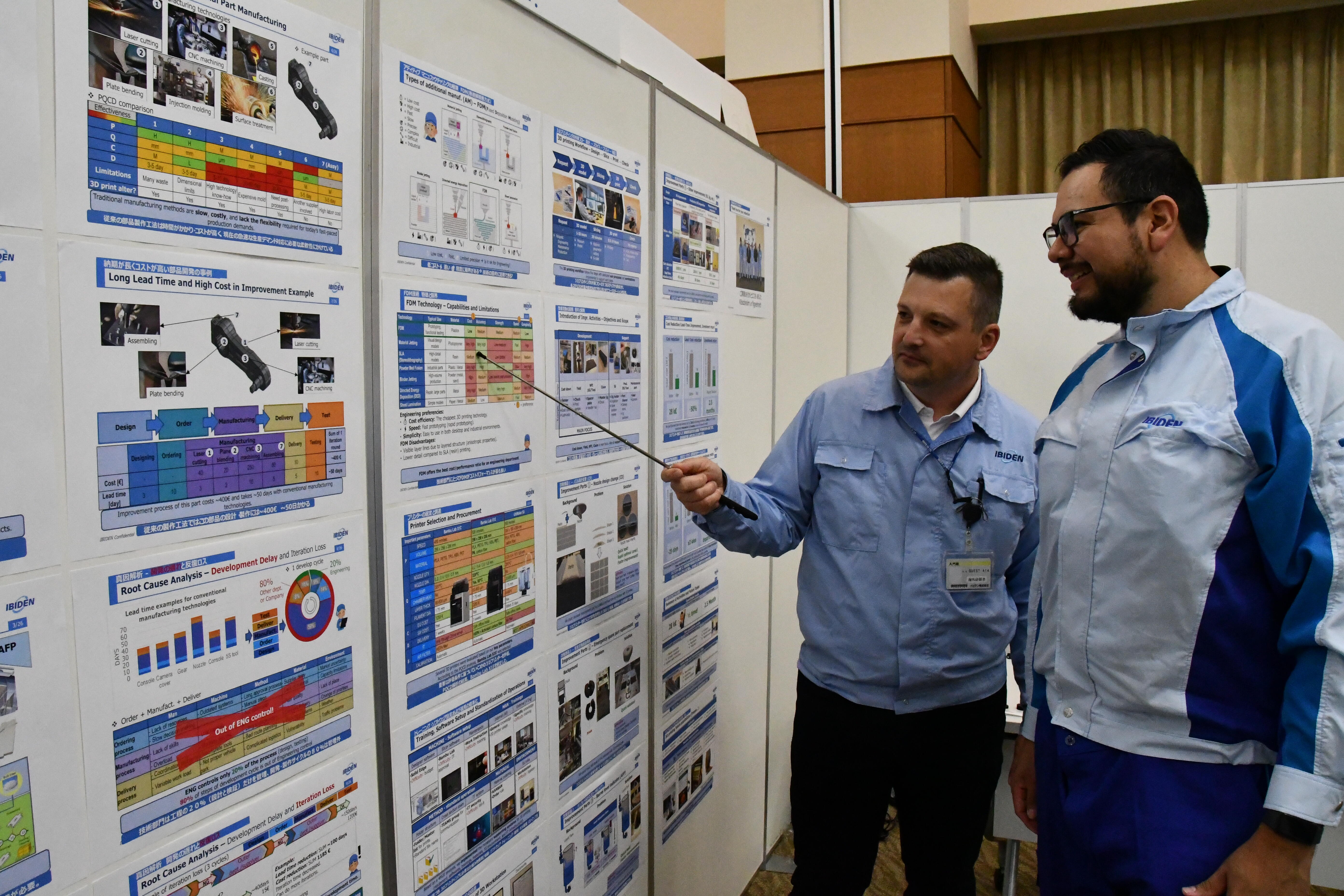
Scenes from the TPM World Conference
IT・Digital Utilization
We promote the use of IT technology aggressively to keep competitive advantage continuously. At our plants where high-function IC package substrates are put into mass production, we use ICT to network all equipment information to maximize production efficiency, stabilize and enhance product quality, and reduce cost. Advanced data analysis driven by accumulating various data from facility abnormality to quality information and processing information helps accelerate an improvement. The use of digital technology has enabled more efficient production and transportation, contributing to reducing energy consumption in IT infrastructure. In addition, to realize sustainable corporate growth and new value creation, the Company is building a digital foundation that leverages AI to connect accumulated internal knowledge to the strengthening of business competitiveness, while also proceeding with the phased introduction of AI agents. In the medium term, we will integrate AI into our operations, evolving it into a "thinking partner" that enables increased productivity and more sophisticated decision-making through collaboration between humans and AI. We aim to maximize business value by creating an environment where AI agents can utilize knowledge and data across the organization to autonomously propose and execute tasks. Furthermore, the Group has established the "IBIDEN Group AI Policy" as a guideline for the utilization of AI and to promote its appropriate and responsible use.
Encouraging Career Development
We adopt a system that encourages personalized career development. We support career development through discussions in an interview with superior concerning skills an employee wants to improve now and, in the future, a superior' s expectations and a support policy. As part of these efforts, we launched an internal job posting system in FY2025 to enable employees to make more proactive career choices. We also launched a self-development correspondence course enrollment assistance system to help employees develop their abilities.
Employment and Support for Junior Employee Retention
In hiring employees, we focus our efforts on aggressively hiring mid-career personnel through hiring methods that also include referrals in addition to new graduates so as to be able to acquire work-ready individuals who are equipped with skills and knowledge that are lacking within our company as well as diverse people. Also, in a bid to support new employees in becoming a part of their assigned workplaces and contributing to the company early on in their careers, we have established a mentor system in which senior members around new employees in the workplace support them. Under this system, new employees appoint senior members as their own mentors. The mentors then provide their mentees with advice on how to arrange their work and on their specialized fields, help the mentees cooperate with other divisions and departments, and listen to the mentees when they seek advice on a variety of matters, whether job related or otherwise, thereby supporting every new employee in starting his/her career development.
Equitable Evaluation and Treatment
To enhance business competitiveness, we believe it is important for each employee to challenge himself/herself to meet his/her own high expectations and achieve these expectations, as well as to raise the overall organizational strength. The Company has a results-oriented target management assessment system in place. Challenge goals closely related to the Company's business results are first established, and the results as well as the process for reaching those results are then evaluated fairly and equitably twice a year. Finally, individual results are directly reflected in their compensation. Also, we promote communication between supervisors and subordinates when setting goals and in evaluation interviews in order to develop human resources.
The Company is reviewing its personnel system to enable each employee to demonstrate their abilities according to their role and expertise, and in fiscal 2025, we implemented revisions to the systems for management and senior positions. For management positions, we have introduced a role-based grade system based on expected roles, establishing a management course responsible for organizational operation, a leader course for driving the delivery of results, and an expert course for demonstrating advanced expertise. For senior positions, we have developed a system of courses and grading levels tailored to roles and aspirations to create an environment where diverse talents can play active roles by utilizing their experience and expertise.
Furthermore, we will not only review our personnel system for managers and senior staff but also for general employees, aiming to create an environment where each and every individual can feel more fulfilled in their work, grow, and thrive.
Conducting Employee Engagement Surveys
Our company and its Group companies in Japan have conducted a survey since FY2007 once every two years, intended to understand and analyze changes in employee sentiment, HR issues and problems through regular observation and to propose and implement solutions for improvement. Since FY2023, we have conducted an annual survey on engagement, including a sense of fulfillment, a sense of purpose, and a sense of belonging, in order to carefully monitor changes in their sentiment over time and reflect them in HR policies in a more timely manner. In FY2025, 95% of our employees participated (target*: 4,077 people; respondents: 3,862 people). The overall score has improved to 3.62 (from 3.45 in the previous year), and we aim to increase it to 3.7 by 2027. Based on the survey results, we are reviewing the evaluation system, strengthening measures to stimulate workplace communication, and increasing the profile of new employee benefit services.
*: Including domestic group companies

Implementing Dialogue Sessions Between the President and Employees
We have positioned corporate culture reform as one of the pillars in the medium-term management plan, and President & CEO Kawashima is focusing on direct dialogue with employees as one of the measures to achieve this. The president holds small-scale dialogue sessions as opportunities to hear directly from employees at each workplace and to share his own thoughts. In FY2025, 62 sessions were held, with more than 400 employees participating.
Through such opportunities, we will continue to promote corporate culture reform by enhancing engagement and encouraging behavioral change in each individual employee.
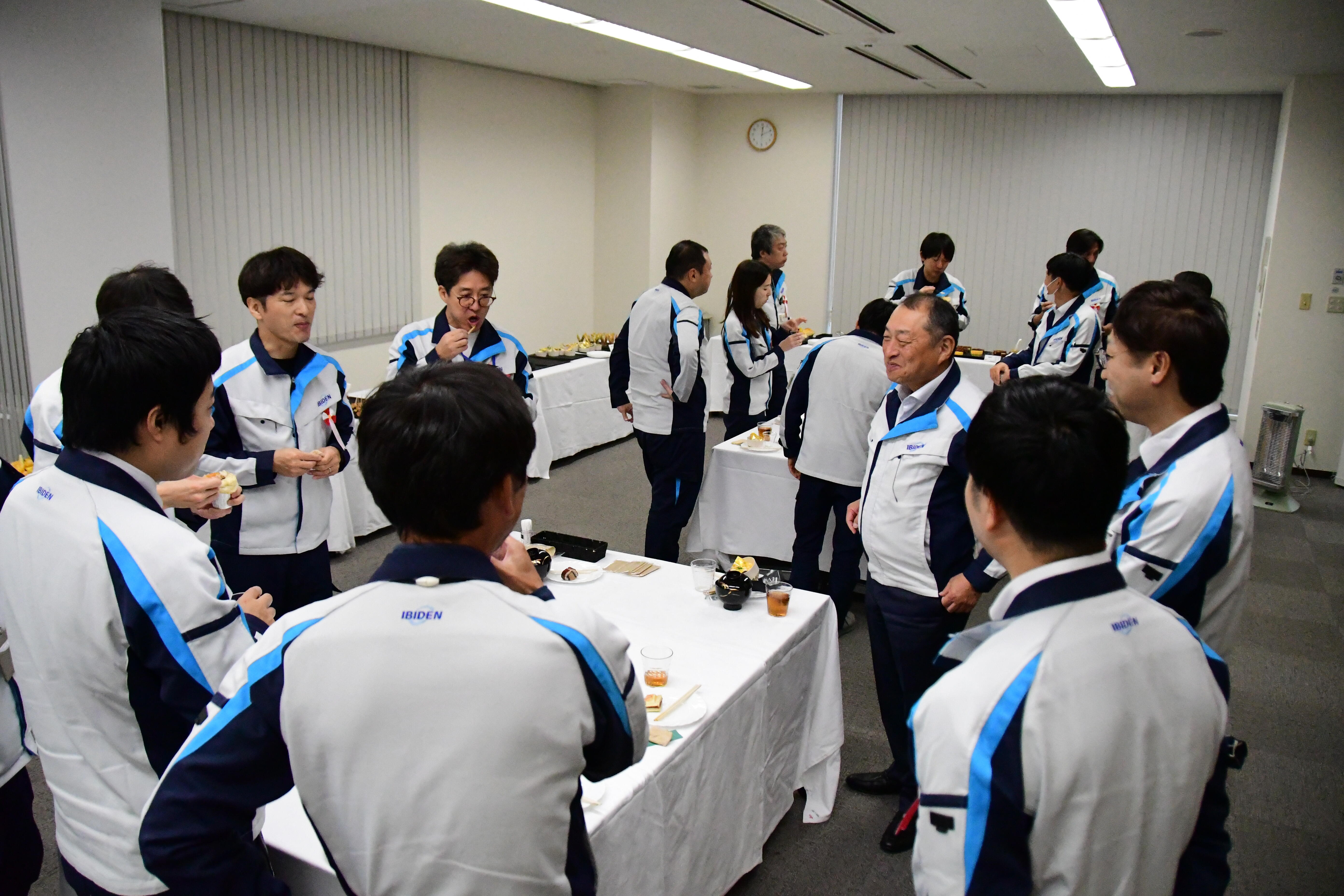
Scenes from the Dialogue Sessions
Respect for Diversity
Our Group aims to realize a work environment and climate in which diverse human resources can exercise their individual abilities and can feel reasons for living and job satisfaction amidst a trend of advancing globalization and diversification of values.
Supporting Work Life Balance
The Company considers it part of its social responsibility to create an environment in which children, our future leaders, can grow up healthy and safe. To this end, we actively encourage work-life balance by, for example, helping our employees to achieve a balance between work and child rearing. The specific systems are as follows:
・Maternity Leave
・Childcare Leave
・Special Paternity Leave (paid leave・available for childcare until the child reaches age of one)
・Short-time Work Program (until the beginning of the 5th grade of elementary school)
and others
To raise awareness of these initiatives and available programs, we have issued the "Ibiden Child Rearing Handbook," which outlines childcare-related work-styles, such as prenatal work-styles, childcare leave, and other programs. This handbook can be viewed not only by employees involved in child rearing but by all employees including those who work with colleagues who are involved in child rearing. It seeks to establish a workplace environment that is understanding toward childcare and to facilitate communication. To encourage male employees to take childcare leave, we also hold seminars on childcare leave for male employees and support programs until they return to work. In addition, we have introduced systems to support work-life balance, such as a partnership with corporate-affiliated nursery schools, and the establishment of a mother's room for pumping milk for babies. As a result of these systems and efforts, we obtained the Kurumin certification from the Ministry of Health, Labour and Welfare in FY2012. Moreover, with our continued activities and improved level of our efforts, we were certified as "Platinum Kurumin" in FY2020. Furthermore, in our company in FY2025, while the rate of childcare leave* taken by male employees was 82.8%, the rate of special maternity leave, etc., including special leave for childbirth, was 95.7%.
*Calculated based on the provisions of the "Act on the Promotion of Women's Active Engagement in Professional Life" (Act No. 64 of 2015).
We also offer flexible work-styles, such as a flextime program, a staggered work hour program, a short-time work program, and a work-at-home program. By providing a leave program for employees who work while nursing sick family members or caring for elderly or other family members and a re-employment program for employees who have left work due to a job transfer of their spouse or due to caring for elderly or other family members, we also strive to create an environment in which diverse human resources can continue to work.
Deepening Understanding of Diversity, Equity and Inclusion
Our Group, by upholding the provision 'we shall not subject others to unfair discrimination or harassment on the basis of their race, skin color, age, gender, sexual orientation, gender identity, ethnicity, nationality, disease, disability, pregnancy, religion, creed, social status or marital status' in our Standards for Employee Behavior, is striving to improve understanding of diversity, equity and inclusion among all employees. We have conducted diversity training programs for those in managerial positions. The programs are aimed at having them acquire accurate knowledge about supporting a work-life balance, promoting female advancement, promoting the employment of persons with disabilities, and appointing foreign workers, as well as knowledge of LGBTQ issues, to understand and respect diversity and utilize such knowledge in their daily management.
When constructing new plants, we are proceeding with measures such as the installation of multi-purpose restrooms and gender-neutral changing rooms.
Promotion of Female Advancement
We started promoting women's participation and advancement in the workplace in FY2010 and conducted various activities, such as improving the work-life balance system and offering training to female employees and managers for awareness-raising. From FY2017, the President delivered a message anew at the start of the Stage 2 of our initiatives for promoting women' s participation and advancement in the workplace, announcing the Company' s policy to actively promote the career advancement of female employees. In the Positive Action for Women's Empowerment, a training program for female employees selected in various divisions and their supervisors, we provided support toward fostering and promoting female employees in the position of junior management (i.e., middle management class), which constitutes the entire pool from which female managers will be developed. We held activity debriefing meetings on a regular basis to receive opinions from the president and outside directors on our activities and instructions on the progress of female advancement. In addition, we actively proceed with awareness education not only for target female employees but also their supervisors, thereby increasing the rate of female managers. Recognizing the importance of further appointing women to managerial positions, we have set medium-term targets for FY2027 (ratio of female managers of 3% or higher for IBIDEN CO., LTD. and 4.8% or higher for IBIDEN and domestic Group companies). We will strive to vitalize our corporate culture by continuously implementing initiatives to expand female employees' advancement in a broad workplace to enable more female employees to be active in wider job categories.
To foster a corporate culture in which it is commonplace for women to be active in managerial positions, our first efforts in our action plan based on the Act on the Promotion of Female Participation and Career Advancement in the Workplace are to appoint at least 10 female managers of middle management or higher over the five-year period from April 1, 2021 to March 31, 2026.
Furthermore, we endorse the purpose of the Gifu STEM Girls Habataki Support Project of Gifu University, selected by the Japan Science and Technology Agency (JST) as an entity to proceed with its program "Support for Girl Students in Choosing Science Courses." The university's project has been designed to provide support for female junior and senior high school students to select STEM courses. By organizing plant tours and networking events with employees, we are striving to raise the percentage of women choosing STEM careers.
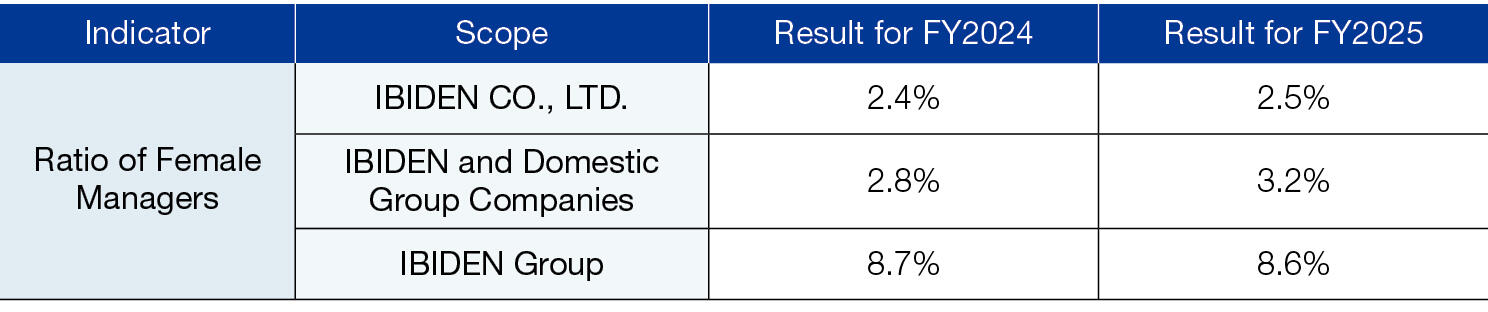
※ The ratio of female managers refers to the proportion of women at the level of middle manager (section manager) and above. Managerial positions at overseas group companies are defined based on the laws of each country and the standards of each company.
Promoting the Employment of Persons with Disabilities
In order to realize a society where persons with disabilities can live together as members of local communities, it is important to encourage their independence through work, and employees with disabilities are playing an active role in the Company. IBIDEN Oasis Co., Ltd., one of our Group companies, was certified as a special-purpose subsidiary*¹ based on the Handicapped Persons' Employment Promotion Act*² in April 2019. We will work with organizations related to the employment of persons with disabilities to stably employ disabled persons with a desire to work, and will provide support for occupational self-reliance through the creation of a safe work environment and the development of their potential abilities. We will also collaborate with local communities to increase employment opportunities for disabled persons, such as by cooperating in the research of a model for an at-home training program using ICT devices to provide employment opportunities to orthopedically impaired or sickly students attending special-needs schools in collaboration with the education board of Gifu Prefecture. From now on, we will also aim to realize a work environment and climate in which diverse human resources can exercise their individual abilities and can feel reasons for living and job satisfaction.
*1 Special-purpose subsidiary: In the case where an employer establishes a subsidiary with special consideration for the employment of persons with disabilities, and the subsidiary meets certain requirements. We regard workers who are employed by the subsidiary as being employed by the parent company as a special case.
*2 Handicapped Persons' Employment Promotion Act: This Act was established with the aim of securing the employment of persons with disabilities through measures, etc. to promote employment, etc. based on the obligation to employ persons with disabilities, etc.
Active Participation of Senior Employees Aged 60 or Over
After consultations between management and employees, in FY2020, we introduced a system with an extended mandatory retirement age, in consideration of the increase in the number of senior employees aged 60 or over and changes in social environment in Japan. We will raise the retirement age from 60 to 65 in phases by FY2028, and making a transition to a system with a retirement age of 65. We also introduced a system in FY2022 that enables senior employees whose desires match with the company's needs to choose from a diverse range of work-styles after their retirement at 65 years. For their compensation, we established a reward system whereby they are evaluated based on their roles and results, to keep them motivated and encourage them to show their expertise and practical skills. Furthermore, in April 2021, we established a workplace for jig and tool maintenance, aiming to expand functions so as to encourage senior employees to play active roles in their workplace.
Going forward, we will also offer many training programs intended for employees aged 50 or over and work out plans on health care seminars and support for nursing care issues, thereby helping them to work healthily and energetically.
Development of Non-Japanese Employees
The Company accepts employees from IBIDEN Philippines, Inc., our overseas group company, through the technical intern training program. Allowing the interns to learn state-of-the-art technologies in Japan and to bring the knowhow to their countries will help upgrade the technical levels of our overseas group companies. We conduct programs for cross-cultural training and financial literacy as well as for Japanese language training and provide support in daily lives by the specialized staff so that overseas employees can work safely and without worry in an unfamiliar environment.

Promotion of Work-style Reform
Working Hour Management
In Japan, rectifying the practice of long work hours has become one of the important issues to be addressed. Even though laws and regulations relating to work hours have been tightened, mental illness and occupational accidents caused by long work hours have become a serious problem, and companies are being asked to further efforts to rectify the practice.
Our company set a goal of reducing the average annual work hours per employee to less than 2,000 hours. Based on this goal, presidents of Operations established their policies on work hours and heads of departments set their targets, and are tracking progress toward those targets. Measures to encourage employees to take annual paid holidays and reduce overtime are also being taken. To make managers better able to handle the complex labor management processes, we provide them with necessary training, added a chat bot that immediately answers questions twenty-four hours a day every day on the company intranet, and make sure that all of them understand the processes. Also, reviewing detailed methods of progressing with work, we have taken on the challenges of optimizing operations and improving their quality in a concerted manner by promoting active in-house communication, reviewing operations, including the aim and target of each task, utilizing IT tools, and changing the ways of proceeding with operations.
Communication between Labor and Management
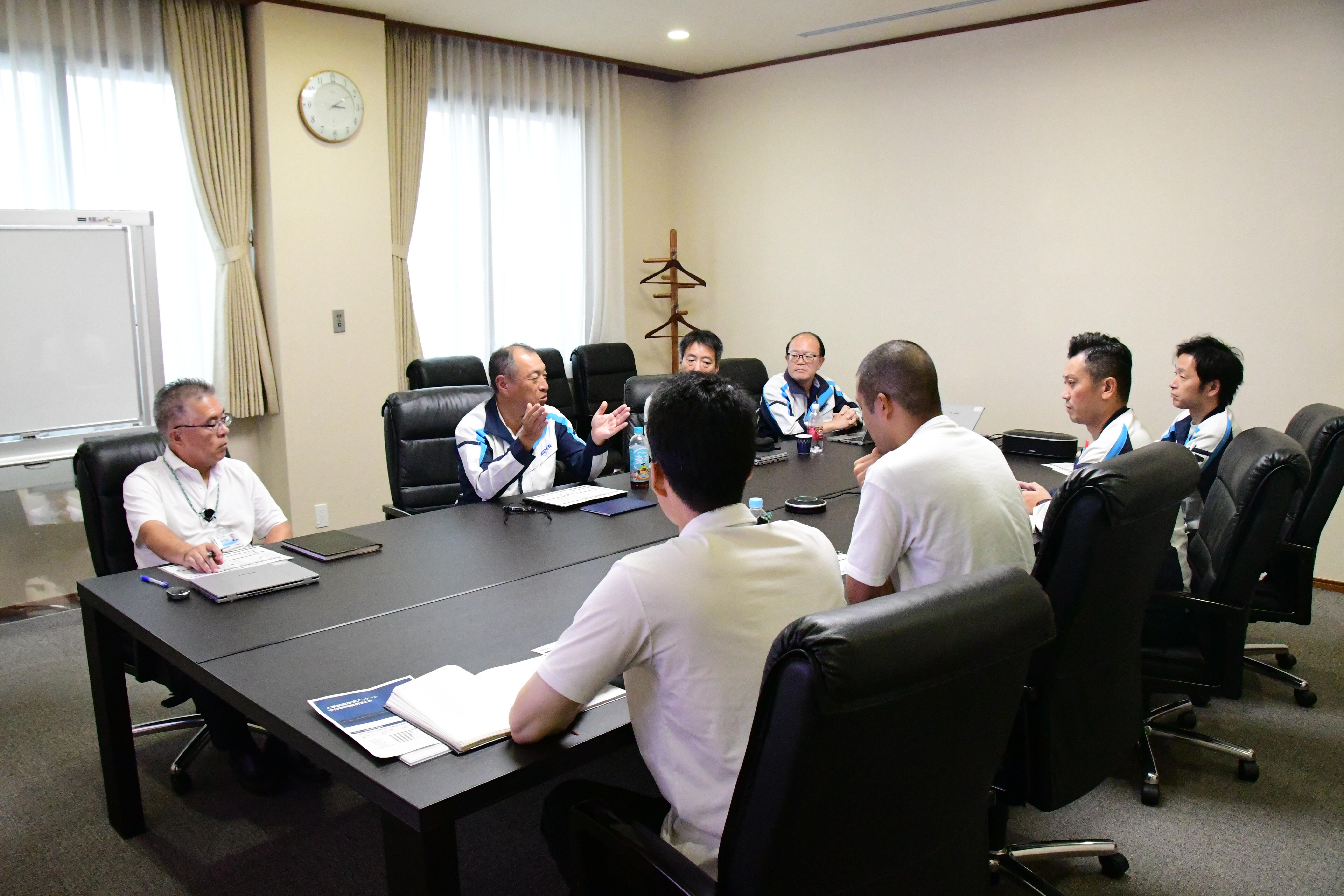
Through a relationship of mutual trust, both the management and employees of IBIDEN work together to create a workplace that is friendly for all employees. In our assessment of the risks and impacts on the work environment, including labor standards, for employees through continuous and cooperative discussions between management and employees, we have proceeded with our collaborative efforts for such areas as time management, and enhancing personnel systems on specific themes. Holding Central Labor Council and the Labor and Management Committee meetings every month, we review the progress of collaborative themes, and both the management and employees work together to discuss and conduct activities toward improving the working environment. Furthermore, providing opportunities for dialogues at various levels between management and employees, including the above-mentioned Council and Committee, we explain about management policies and items related to production plans and items concerning hiring policies, and discuss items that seriously affect employees, etc.
Thorough compliance with labor-related laws and regulations
Through compliance with each country's employment-related laws and regulations, such as labor standards acts, IBIDEN's group companies take action to follow social common sense and other rules. In Japan, our Personnel and Labor Section monitors the revision and abolishment of state laws and regulations that we are required to comply with. In the unlikely event that the possibility of a violation of labor standards occurs, we will immediately confirm the situation, analyze the root cause, and take measures to prevent it from happening again. In FY2025, no serious offenses were confirmed related to labor laws (Including laws related to safety and health) that may have an impact on our business activities.